

The mechanical structure of a segmented gamma scanner consists, among other things, of one or more axes to manipulate the positions between the container and the detector. Such a system is also referred to as a sample manipulator. Depending on the type of axes, either rotational movements or linear displacements of the container and/or detector are possible. These depend, among other factors, on the built-in axis control and the control and operating software. The measurement procedures most commonly used in practice (also known as scan modes) are described in more detail below and are deepened by application examples.
The basic principle of a segmented gamma scan measurement consists in dividing the measurement process into a number of consecutive individual measurements for different positions of the detector relative to the container. These measurements - referred to as scanning - can be carried out by either a stepwise or continuous motion of the respective axis(es). During continuous measurement, typically one axis acts as the master axis while the measurement data are recorded during its (continuous) movement. The other axes are only used to approach the starting position for the next continuous measurement. No measurement data is acquired during these movements.
In a segmented gamma scan measurement, each movement is divided into a number of intervals or positions. Specific designations have been introduced for the description of the number of intervals or positions of the various axis movements, which are also used internationally (see e.g. Synopsis of Gamma Scanning Systems or the ensuing SN EN ISO 19017:2018-03).
| sectors | number of intervals or positions per rotation |
| segments | number of intervals or positions for a vertical translation movement |
| steps | number of intervals or positions for a horizontal translation or pivoting movement |
The scan modes described below refer to a measurement system consisting of a rotary table on which the container is located and a (collimated) detector system that can be moved vertically and horizontally or pivoted horizontally. Measurement systems with different setups can usually be easily adapted to the arrangements described here.
Point measurement
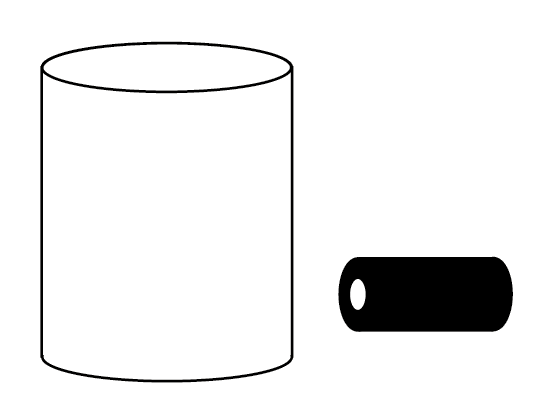
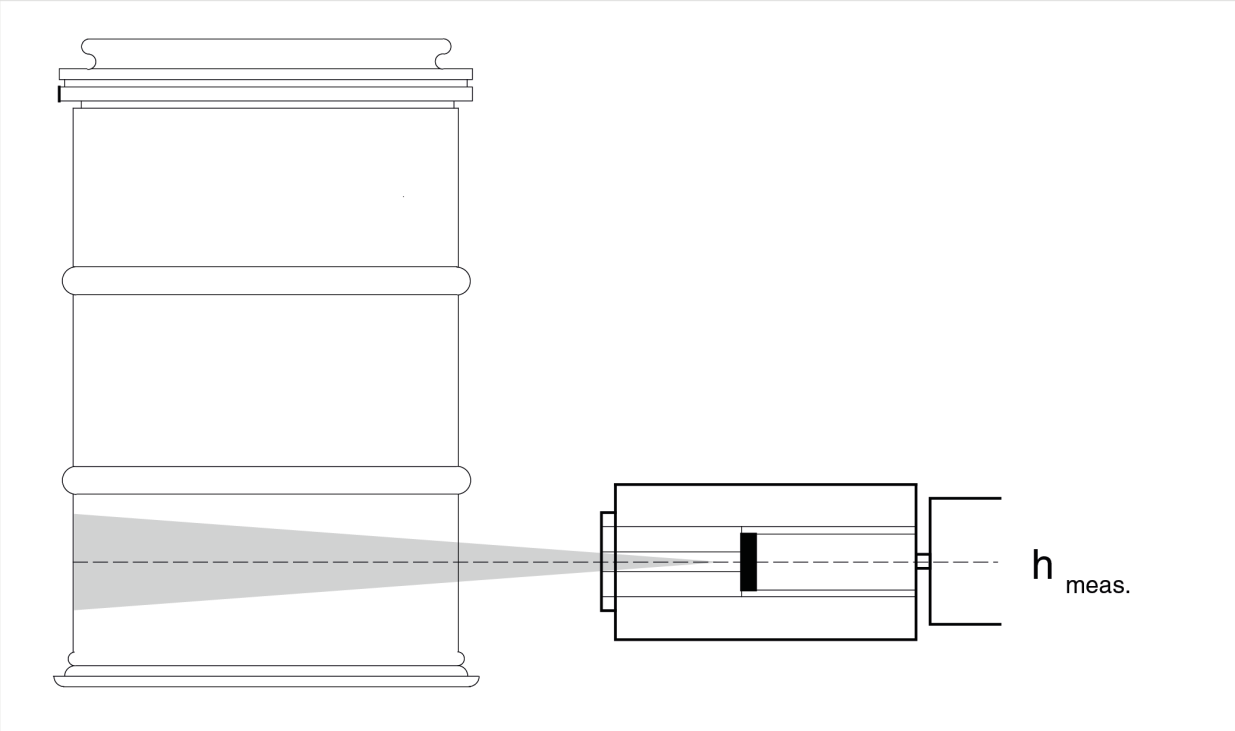 The detector and the container are in a fixed position. Except for approaching the measurement position, no further movement of an axis takes place. Depending on the opening angle of the used collimator and the height position hmeas of the detector, it "sees" either the whole container or only a portion of the container at a given distance from the container. The former arrangement is referred to as open geometry, the latter as collimated geometry.
This scan mode is used for detailed studies, such as investigating local activity centers, known as hot spots, or when it is known a priori that the contents of the container are almost homogeneous (this applies to both the matrix and the distribution of activities!).
| sectors | 1 |
| segments | 1 |
| steps | 1 |
| spectrum | 1 |
Disc scan
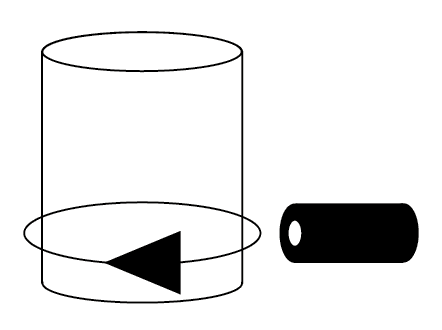
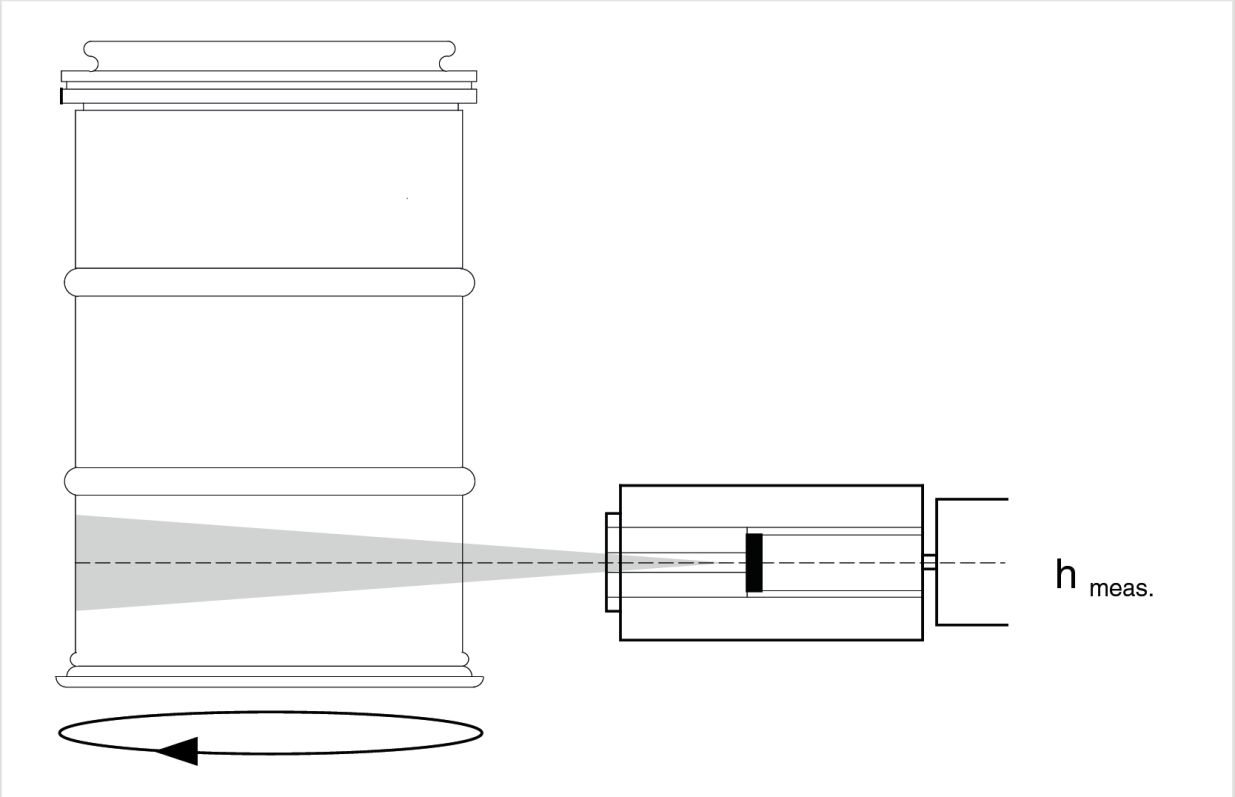 The (collimated) detector is in a fixed height position hmeas and is aligned towards the rotation axis. The container rotates at a constant speed around 360° or multiples of that. Each complete rotation is divided into N sectors of equal length. For each individual sector, a complete gamma spectrum is measured and stored.
Depending on the opening angle of the collimator and the position of the detector relative to the container (i.e., the height position hmeas and the distance S), the detector "sees" either the entire container or just a portion of it during rotation.
This scan mode can be used for the characterization of homogeneously filled containers or for further investigations, such as those concerning "hot spots." The rotation of the container compensates for radial and angle-dependent inhomogeneities in the distributions.
If the content of the container with radioactive waste is homogeneous within individual (known) segments, then disc scan measurements for these segments can be performed by selecting appropriate collimator opening angles and/or distances of the collimated detector from the container. By combining the results for the individual segments, the container can be characterized. In these cases, one also speaks of a quasi-homogeneous waste package.
| sectors | N |
| segments | 1 |
| steps | 1 |
| spectrum | N |
Vertical translation scan
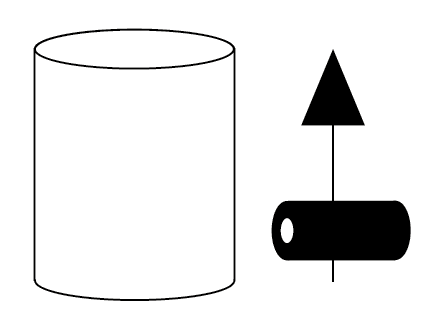
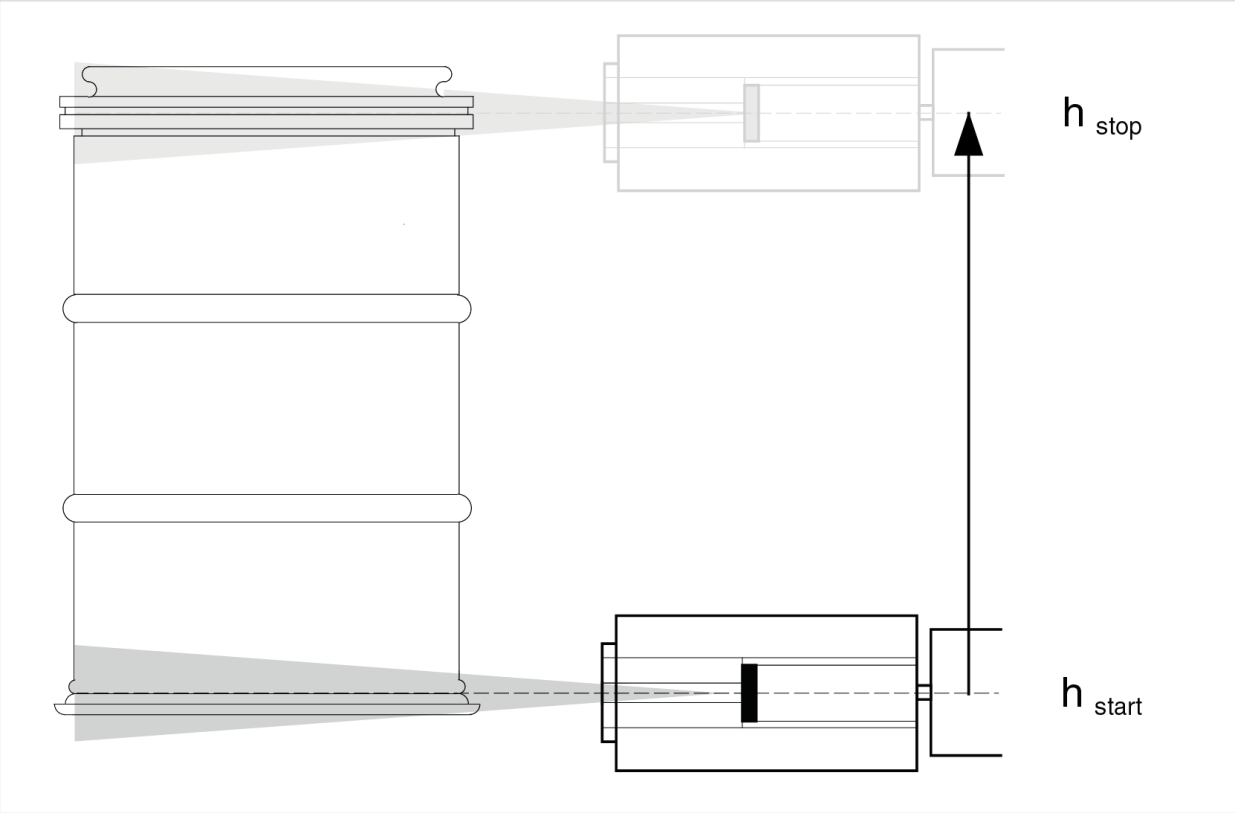 The container does not move; the detector performs a vertical lift movement from the start position hstart to the end position hstop. The movement is divided into M segments. For each individual segment, a complete gamma spectrum is measured and stored.
Depending on the opening angle of the collimator and the position of the detector relative to the waste package, the detector "sees" either the entire container or just a portion of it during the lift movement.
This scan mode can be used for further investigations, such as determining local activity distributions, or when there is a priori knowledge of segmentally homogeneous sections. The lift movement of the detector can resolve height-dependent inhomogeneities but cannot resolve radial or angle-dependent inhomogeneities.
| sectors | 1 |
| segments | M |
| steps | 1 |
| spectrum | M |
Horizontal translation scan
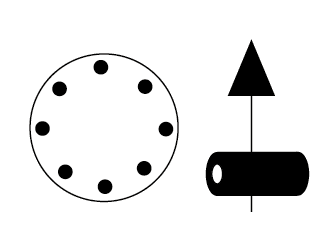
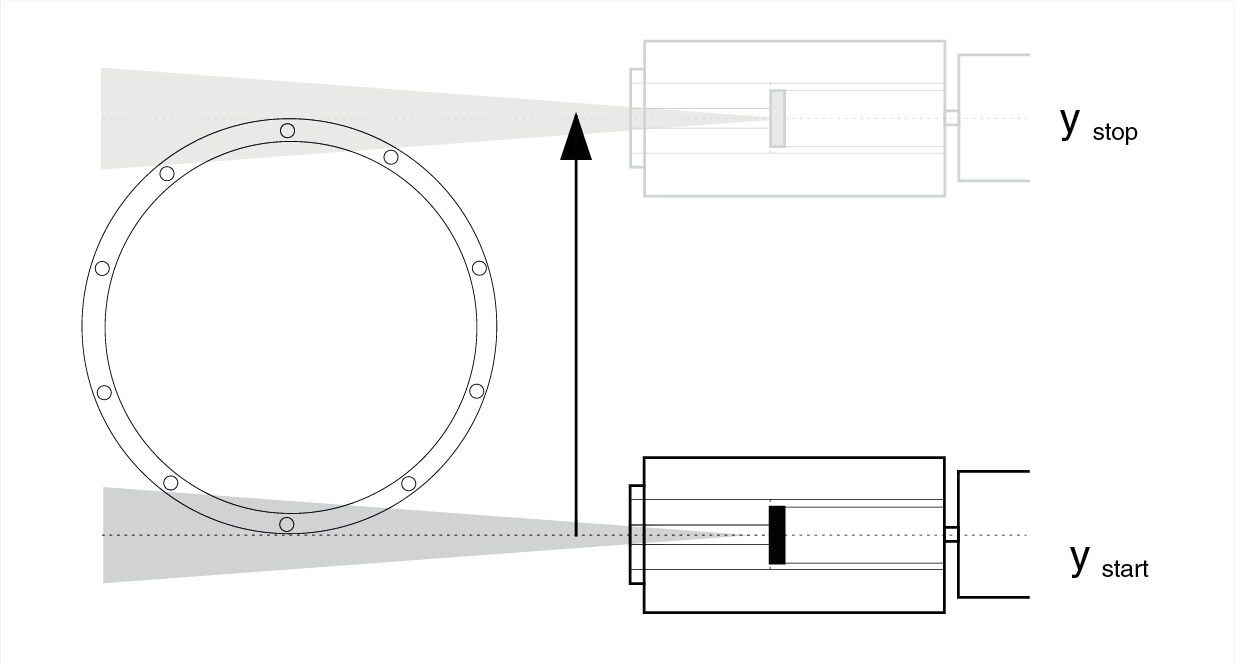 The container does not move; the detector performs a horizontal translation movement from the start position ystart to the end position ystop. The movement is divided into K steps. For each individual step, a complete gamma spectrum is measured and stored.
Depending on the opening angle of the collimator and the position of the detector relative to the container, the detector "sees" either the entire container or just a portion of it during the translation movement.
This scan mode can be used for further investigations, such as determining local activity distributions.
| sectors | 1 |
| segments | 1 |
| steps | K |
| spectrum | K |
Pivot scan
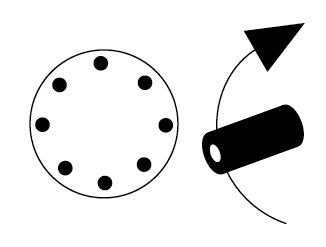
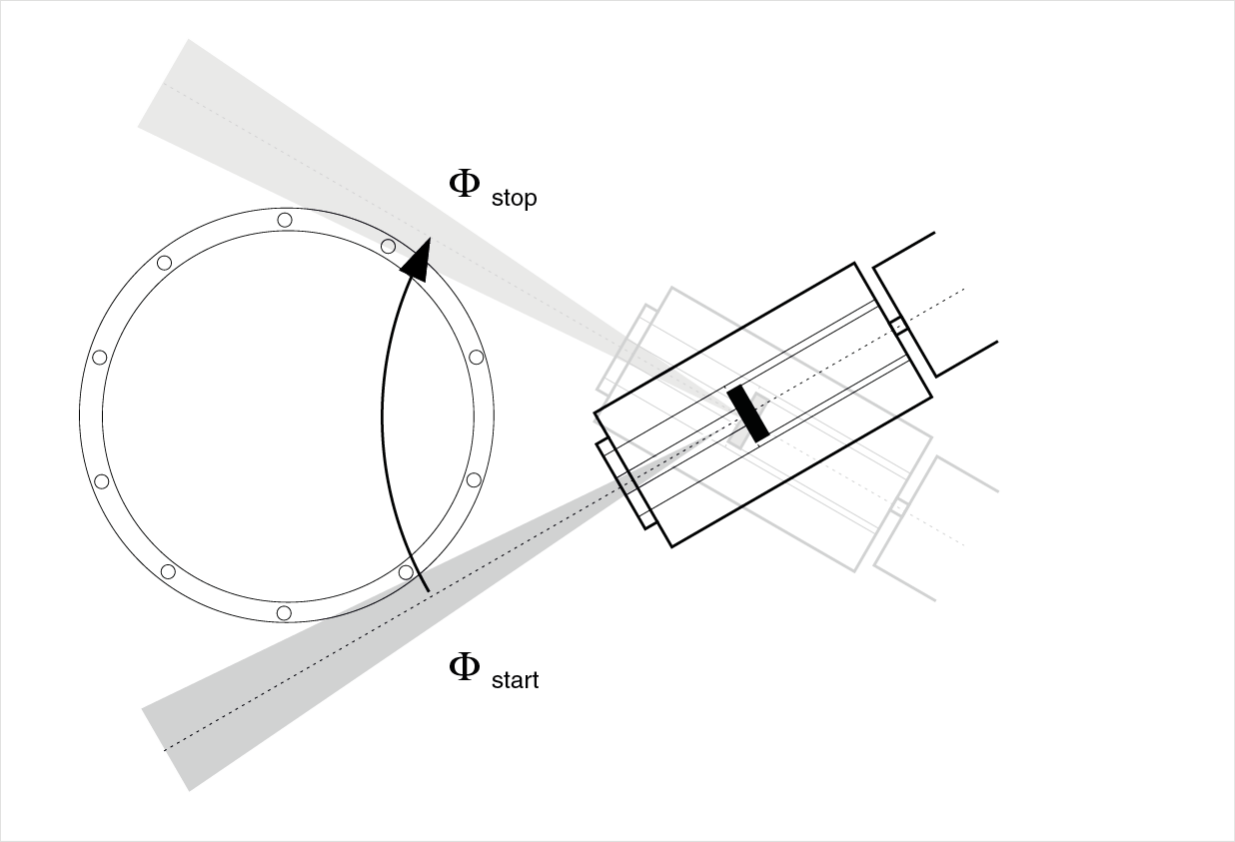 The container does not move; the detector performs a horizontal pivot movement from the start position Φstart to the end position Φstop. The movement is divided into K steps. For each individual step, a complete gamma spectrum is measured and stored.
Depending on the opening angle of the collimator and the position of the detector relative to the container, the detector "sees" either the entire container or just a portion of it during the pivot movement.
This scan mode can be used for further investigations, such as determining local activity distributions.
| sectors | 1 |
| segments | 1 |
| steps | K |
| spectrum | K |
Spiral scan
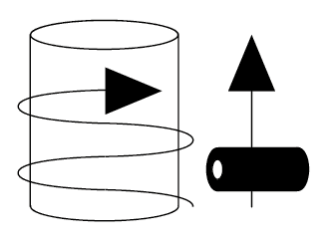
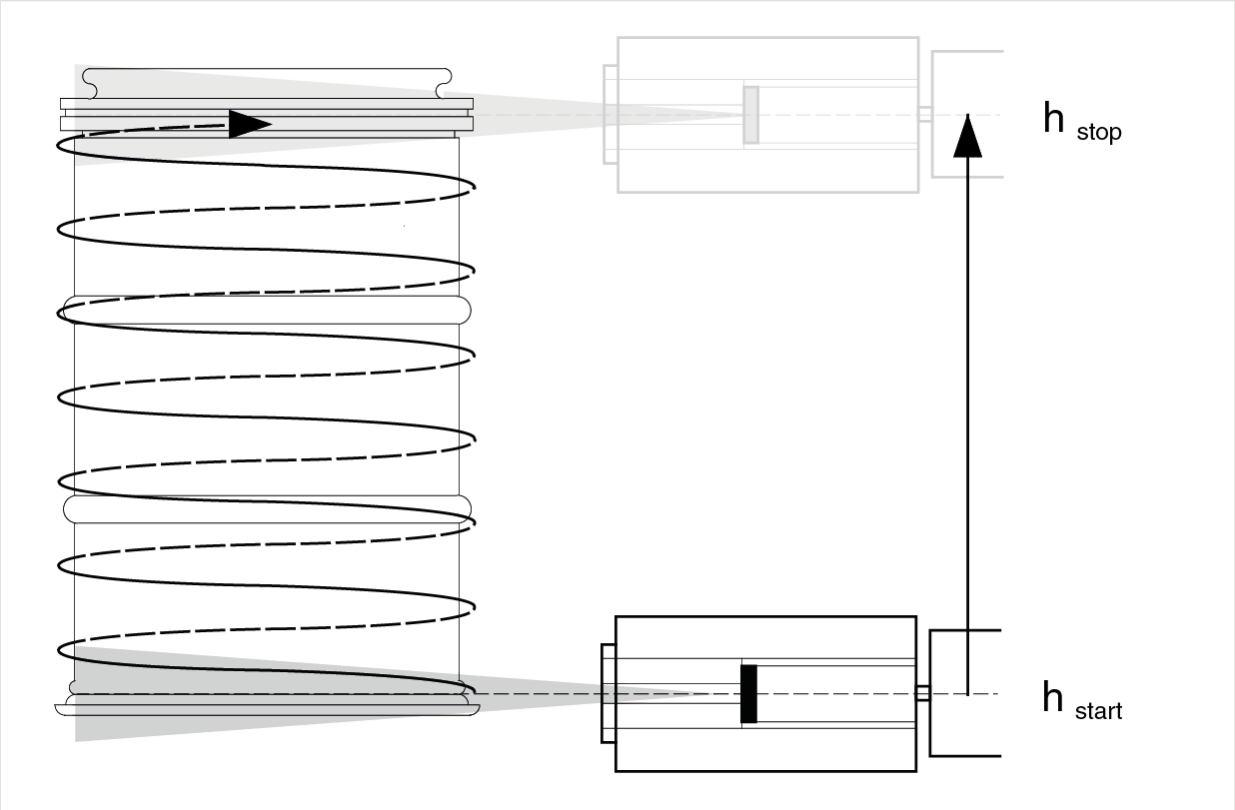 The detector performs a vertical translation movement from the start position hstart to the end position hstop. At the same time, the container rotates at a constant speed. The lift movement is divided into M segments. The container rotates by 360° in each segment. Each rotation is divided into N sectors. In total, M · N complete gamma spectra are measured and stored.
With appropriate choice of measurement parameters, i.e. the opening angle of the collimator and the speeds of the lift and rotation movements, etc., the detector "sees" the entire container.
This scan mode can be used for the characterization of a waste package. Today, it is usually replaced by a multi-disc scan. The results of these two methods are fundamentally analogous.
Note:
The spiral scan was one of the first measurement methods for the characterization of 200 L barrels with radioactive content. Initially, only a motor was used to drive the rotational and lift axis coupled together firmly through a distributor gearbox (see e.g. P. Filß, Specific activity of large-volume sources determined by a collimated external gamma detector, Kerntechnik, vol. 54, no. 3, 1989, pp. 141-141).
| sectors | N |
| segments | M |
| steps | 1 |
| spectrum | M · N |
Multi-disc scan
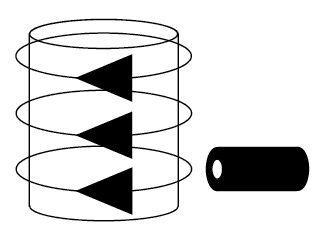
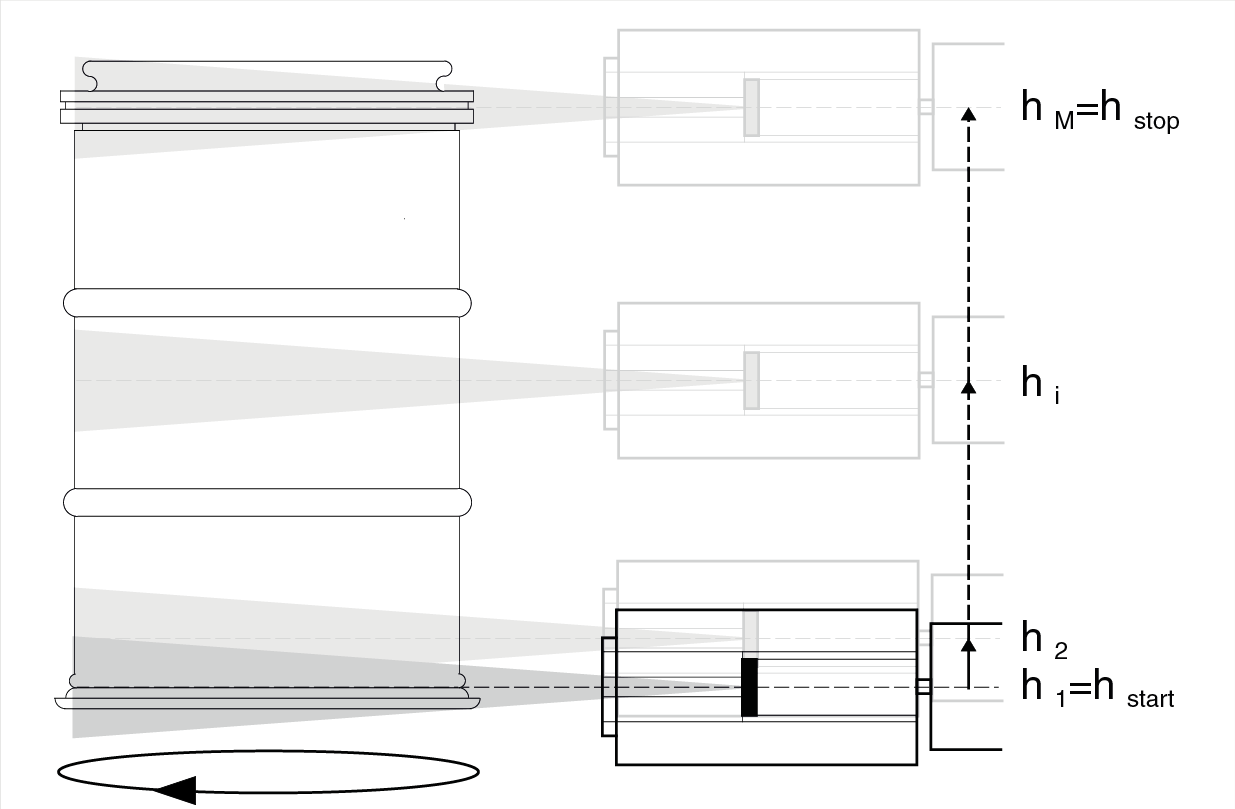 The container is divided into M equidistant segments, starting from the starting position h1=hstart and ending at the end position hM=hstop. For each segment hi, the container is rotated by 360° or multiples thereof while a height difference of Δh = (h2 – h1) is traversed. Each rotation is divided into N sectors. For each individual sector, a complete gamma spectrum is measured and stored.
With appropriate choice of measurement parameters, i.e. the opening angle of the collimator and the number of lift and rotation movements, etc., the detector "sees" the entire container.
This scan mode can be used for characterizing a container with radioactive content. From the measured (individual) spectra and the summed spectrum, the gamma-emitting nuclides contained in the container can be identified and quantified using some additional information. Additionally, the nuclide distributions can be created depending on the height and angular position, from which information regarding the homogeneity of the activity distribution and/or existing "hot spots" can be derived.
| sectors | N |
| segments | M |
| steps | 1 |
| spectrum | M · N |
Zigzag scan
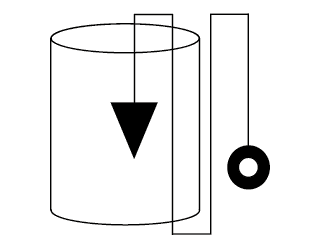
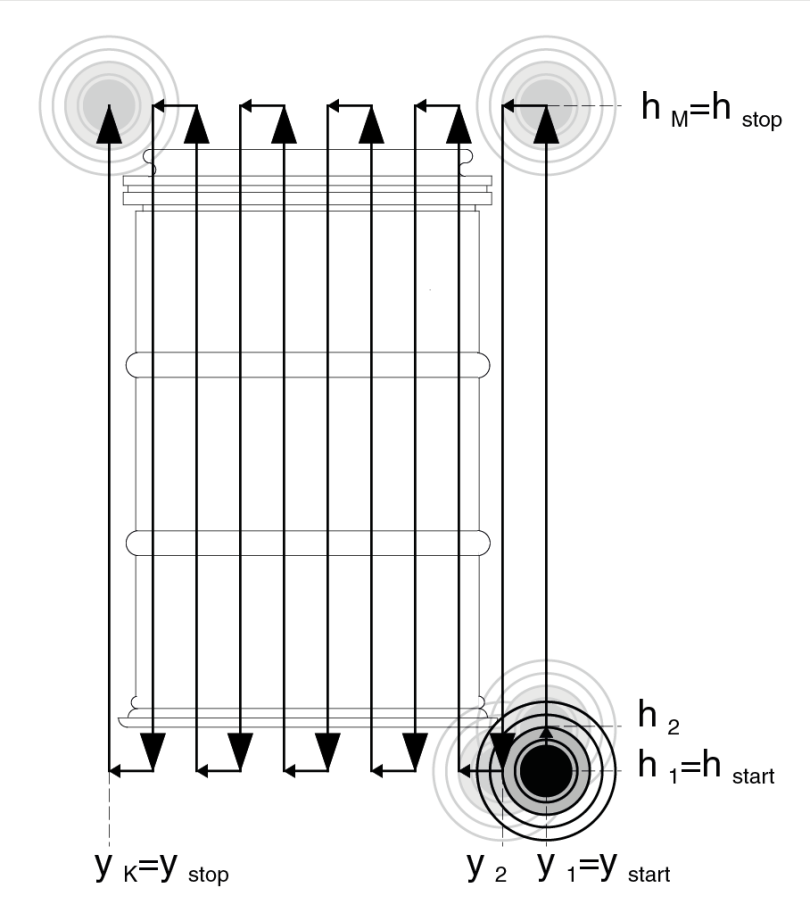 The zigzag scan is a combination of vertical and horizontal translation scans. The waste package does not move; the detector performs a vertical lift movement from the start position hstart to the end position hstop. After the end of each lift movement, the detector performs a small horizontal translation movement, initially starting from the starting position y1=ystart, each followed by another vertical translation movement in the opposite direction. The horizontal shift occurs (K-1) times until the end position yK=ystop is reached, followed by a final vertical translation. In total, M · K complete gamma spectra are measured and stored.
Depending on the opening angle of the collimator and the position of the detector relative to the container, the detector "sees" either the entire container or just a portion of it during the translation movements.
This scan mode can be used for further investigations, such as determining local activity distributions. Additionally, nuclide distributions can be created depending on the height and horizontal translation position, from which information regarding the homogeneity of the activity distribution and/or existing "hot spots" can be derived.
| sectors | 1 |
| segments | M |
| steps | K |
| spectrum | M · K |
